

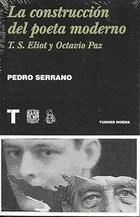
Modern poetry adopted a critical position towards the values and discourses prevailing in the 20th century. Through the most representative and influential cultural figures in their respective societies, T. S. Eliot and Octavio Paz, Pedro Serrano proposes a novel approach to the paradigms of this period. They were not contemporaries, they came from different cultural origins and wrote in different languages. However, they understood poetry in parallel, shared achievements and contradictions, and identified themselves as poets in their corresponding cultural contexts. Based on a wide selection of his work, Serrano analyzes the way in which both poets share a way of facing, in their poetry and literary criticism, their daily and intellectual concerns. The result is an atypical guide to reading and rereading Paz and Eliot from another perspective.